Good morning, writers of tall tales, rattlers of cages, sowers of chaos!
It’s been ages since I’ve seen you and/or the sun, but recent conversations with aspiring authors have lured me out of the Cave of Perpetual Caviness to dispel some common myths and set right some bad advice I’ve encountered for YA authors seeking traditional publication.
Don’t let the fact that I’ve been wearing the same uniform (bird pants, Rochester Teen Book Fair 2010 shirt, fleece pullover, none of it remotely matching) since basically last month detract from my otherwise totally professional professionalism. Just be grateful this is a blog post and not a video, and then we are moving on to the myths!
But first, a friendly neighborhood disclaimer: There are many paths to publication, and what works for one author may not work for another, or may not work in exactly the same way. The following is based on my personal experience as a traditionally published author of young adult novels and my correspondence with other traditionally published YA authors, editors, agents, booksellers, librarians, bloggers, and related bookworms. It’s not intended to address self-publishing, small press publishing, write-for-hire work, book packaging, nonfiction, or other non-YA categories or shorter forms of fiction (though some of the information may still apply). Also, it totally may cause drowsiness, and it’s not recommended for writers without immediate access to wine and/or chocolate and/or elastic-waist pajamas, which are basically universal requirements for YA authors, and that is not a myth.
Still with me? Okay, then. In the words of Aragorn as played by Viggo Mortensen in The Fellowship of the Ring, movie edition, “Let’s hunt some orc.” By which I obviously mean, “Let’s bust some myths,” but what self-respecting YA author can pass up an opportunity to recall Aragorn in his orc-hunting finery? “Leave all that can be spared behind.” Onward!
MYTH #1: Always have a few different books in the works, because you never know what a publisher may be looking for.
Depending on how your muse works, and how much track-hopping your brain can handle, it’s not necessarily a bad idea to have multiple projects in the pipeline, but…
Most traditional publishers don’t accept unsolicited manuscripts. Until you’re published and have a working relationship with an editor(s), you don’t generally have an opportunity to interact with or pitch editors directly (unless you do so at a conference where pitching is part of the deal, but even then, you’d be pitching one book).
Your book gets into an editor’s hands through your literary agent. To secure an agent, you must first query that agent, and you do so with one complete manuscript — a manuscript that’s been spit-shined until it gleams. So, if that one book is to land you an agent that will eventually land you a book deal, and eventually open up the door to future book deals, it makes sense to devote your creative energy and time into making that one book truly amazing before worrying about the other books.
Further, most editors and agents will tell authors not to write what you think they’re looking for, but to write the book that you’re looking for. Your passion for the story will shine through in a way it never could if you were writing simply to match an editor’s presumed wishlist — something that may change by the time your book is ready for submission, anyway.
This is not to say that you shouldn’t have multiple ideas in progress, because if you don’t land an agent with one book, you can start the query process again with the next complete book. Also, sometimes an agent will love your writing style but the book you’re querying isn’t a good match for whatever reason (maybe she already has something similar on her client list), and that agent might ask if you’re working on anything else, in which case you can let her know about your other projects. But until (and unless) that happens, your priority should be to finish that first book — the one you love and believe in the most. Pour your heart and soul into making it shine, and then query agents for that book. Once you’ve secured an agent, you can let him know about your other projects, and together you can decide which project should take priority next.
MYTH #2: In a query letter, it’s best to tell a prospective agent about all of the projects you’re working on. That way he can pick which project sounds the most interesting.
An agent doesn’t want to play bobbing-for-manuscripts from a list of random titles and topics. She wants to hear about the best, most awesome book you’ve written, and she wants to fall in love with it from your clever, confident, intriguing pitch. After you’ve secured agent representation, you can tell her about the other projects you’re working on.
MYTH #3: Once you land an agent and sell your first book, selling subsequent books is easy.
While it’s true that certain obstacles are removed once you’ve gotten your foot in the door with an agent and editor, past success is no guarantee of future success. You won’t have to search for a new agent again (provided you and your current agent are happy together), and the editor who published your last book will likely consider your next one for publication, but she’s under no obligation to do so. While being published may grant you the privilege of having an editor eagerly awaiting your next book, that book will be evaluated on its own merit. Further, if sales of your last book didn’t meet expectations, you may have more trouble selling the next one, or you may be forced to sell it for less money than you anticipated, because in the eyes of the publisher, you’re more of a financial risk. And editors change houses all the time — the editor who bought and adored your first book may be leaving for greener pastures, and her replacement may not have the same tastes (the bright side in this scenario is that if your current publisher passes on buying your next book, your agent may be able to submit it to your former editor at her new publisher for consideration).
Another challenge to selling subsequent books that authors must consider is whether to sell on complete manuscript or to sell on proposal. Selling on proposal means that your agent sends the publisher a proposal — generally, a synopsis (an outline or summary of the book which can range anywhere from 2-50 pages), along with the first 30-100 pages of the actual manuscript, depending on how much the publisher wants to see — instead of a finished novel. Selling a complete manuscript means it may take longer — you may not be ready to submit it until long after your last book hits the shelves. Selling on proposal presents its own challenges — some authors don’t like to plot books in advance, and sometimes the finished product is different than the initial outline implied, which can cause conflict on both sides if an editor isn’t happy with the outcome. Also, it may be difficult to properly estimate how long it will take you to complete a proposed manuscript, creating stress if a deadline creeps up too quickly.
So, once you sell your first book, you do have certain advantages over a yet-to-be-published author, but it’s not necessarily easier. No matter how many times you’ve been published, and no matter what your level of success on previous books, writing and selling that next book is hard work, period.
MYTH #4: In the traditional publishing industry, it’s unethical for any editor or publishing professional to charge money for critiques, proofreading, coaching, or other editorial services. Aspiring authors should never pay for such services.
Ahh, tricksy Hobbitses! This is one of those myths masquerading as legitimate advice.
It is, in fact, unethical for a literary agent to charge prospective authors money for the privilege of reading their work, or for an agent to require an author to use a paid editorial consultant or book doctor prior to considering that author’s manuscript. Agents make money on the sale of an author’s work and future royalties — agents receive a standard 15% commission (slightly higher for foreign and subrights sales) from an author’s earnings on the books he’s sold.
It is, in fact, also unethical for an editor at a traditional publishing house where he is a paid employee to charge money for the promise of publishing an author’s work (remember, in the traditional publishing model, the publisher pays the author — not the other way around). An author isn’t charged for in-house marketing services, cover design, editorial services, book distribution services, catalog listings, or other standard services that go along with publishing and marketing a book.
However — here’s where the myth part comes in — there are perfectly legitimate, fee-based service providers available to authors to help with everything from learning an aspect of the craft to goal-setting and motivational coaching, developmental editing (critique of big picture elements like plot, character development, pacing, etc.), proofing/copyediting, and more. Often an author will hire this type of service provider to help polish up the manuscript before starting the agent query process. These individuals may be published authors who offer editorial consulting services, college or community writing instructors, people who work or have worked in the publishing industry, freelance writers and editors, and other trusted individuals with the knowledge and experience to help authors write better, stronger fiction. They may be called independent editors, manuscript consultants, writing coaches, editorial consultants, writing mentors, and just about anything else you can imagine.
There is nothing unethical about charging fees for services rendered. Just watch out for anyone promising agent representation or traditional publication in exchange for a fee, or anyone “referring” you to fee-based services as a precondition of representing or publishing your work.
The best way to protect yourself from unethical individuals and publishing-related scams is to do your research. Always ask for references from anyone you’re considering doing business with, and be wary of anyone who refuses to provide references or who makes you feel uncomfortable for asking questions. Always get service and payment terms in writing before agreeing to said terms to ensure that both parties are clear on expectations. If you know people who’ve happily used such services in the past, ask for recommendations. Don’t let your dream of getting published blind you to anyone who may be trying to take advantage.
MYTH #5: Once you’ve gotten the stamp of approval from your mom and your best friend and that nice lady from the community potluck, you’re ready to start querying agents with your manuscript.
Do not — I repeat, do not — query a book that’s only been reviewed by your friends and family (even if those friends are part of your target audience, like teen readers). Before querying your work, it’s important to get objective feedback through a trusted critique partner or group (particularly from writers who are either already published, who work / have worked in the industry, or who are more experienced and better writers than you), and possibly even through a paid service like the ones discussed above, if that’s a possibility for you. You can find critique groups through local writing schools or meetups in your area, through group events like NaNoWriMo meetups, through professional associations like SCBWI and RWA, and through hundreds of online groups and classes.
If you’re in the market for a critique group, you may want to check out these oldies from the archives:
Evaluating Critique Groups: 6 Crucial Questions
Are You An Ideal Critique Partner?
MYTH #6: Finding an agent can take months or even years, so it’s a good idea to get a head start and query agents before finishing your manuscript. By the time you get a response, your manuscript will be complete.
Unless you’re doing so as part of a conference where pitching agents is part of the deal, do not cold-query agents until the book is 100% complete, polished, and submission-ready. Lots of writers make the mistake of querying too soon, only to get a quicker-than-anticipated response from an interested agent requesting the manuscript. It’s pretty embarrassing for a writer to respond to a manuscript request with, “Well, uh, it’s not actually done. I didn’t think I’d get interest so quickly.” It’s even worse to rush through the completion of a manuscript just because you queried too soon and don’t want to leave the agent hanging.
This doesn’t mean you can’t do some advanced preparation before your manuscript is complete. While most of your energy should be devoted to getting your book submission-ready, you can (and should) start researching potential agents for your query wishlist. You might also start following agent blogs and Twitter feeds or participating in online discussions with other writers and industry professionals to learn as much as possible about the business.
Here’s some additional advice and info about the agent search, when you’re ready:
How to Query Lit Agents: 6 Overlooked Steps
Literary Agent Offers: Don’t Settle
But remember, keep your primary focus on writing and finishing that book!
MYTH #7: If you share your work with an agent, editor, or writing coach prior to publication or copyright, that person will steal your idea and give it to one of her existing author clients to write.
This sounds suspiciously like the whole razors-in-the-Halloween-candy urban legend thing. I mean, anything is possible, but how long do you think those agents or editors would stay in business if they made a habit of burning new writers just to help their current authors?
It’s natural to be cautious about sending your work out into the world, but it’s a necessary part of the path to traditional publication. Agents won’t offer representation on something they haven’t read, nor will editors offer to publish it. If you’re truly worried about someone stealing your work, the best way to ensure peace of mind is to do your research. As with hiring editorial service providers, it’s important to know who you’re doing business (or critique partnerships) with. For editors and agents, Google names, ask for references, check them out. For critique partners, begin slowly by sharing smaller pieces of work until you’ve built up enough mutual trust to share a full manuscript.
Finally, if you’re really serious about protecting your work, don’t post it online where anyone can see and potentially copy it and don’t leave your laptop in your car where anyone can see and potentially smash your window to get it.
MYTH #8: Before you start querying, buy an ISBN and have your manuscript copyrighted.
This is a common reaction to the fear-of-idea-stealing, but it’s unnecessary and possibly confusing and expensive. If you’re seeking traditional publication, once you sell your book to a publisher, that publisher will assign the completed manuscript an ISBN and will submit it through the proper channels to have it copyrighted in your name.
MYTH #9: Agents only want to work with published authors, or with authors who have publishing or celebrity connections.
While some agents are closed to new client submissions, many (we’re talking tons of) agents are open to — and actively seeking — queries from debut authors. When I signed on with my agent, I’d never been published, and the only celebrity connection I had was my imaginary domestic partnership with Aragorn, as played by Viggo Mortensen, who never returns my calls. Agents want to work with authors who write good books. Period. So if you write a good book, you have a good chance at landing an agent, no prior publication or celeb-besties required.
MYTH #10: If you know someone who has an agent, ask her to recommend you to that agent, or just tell that agent in your query letter that your friend suggested you query him.
If you do this, well… Welcome to Awkwardsville. Population: You. And probably your friend. Because no one wants to be put on the spot like this. If your friend has an agent, and her agent is accepting new clients, and she thinks her agent would love your manuscript and that you two would be a good professional fit, your friend will approach you first. She will encourage you to query her agent and she’ll offer to make the introduction. And don’t try to be sneaky by name-dropping your friend in the query letter if she hasn’t given you permission to do so. Agents follow up with their authors if someone claims that the author has referred him, and lying about this — or assuming it’s okay without getting permission — will burn your bridges with both the agent and the friend.
MYTH #11: The best way to secure an agent is to first seek out blurbs (personal recommendations or favorable quotes) for your unpublished manuscript from published authors.
Blurbs are placed on book jackets and marketing materials to help sell books to bookstores, librarians, and readers. They are not typically used to attract agents. That said, if your spouse or best friend is, say, J.K. Rowling, and she promised to blurb anything you ever write, you should probably mention this in your query letter.
But for 99% of aspiring authors, this isn’t the case. And unless the published author in question is a close personal friend of yours — and even then, I’d tread lightly here — do not ask him to read your unpublished manuscript for a potential blurb. Published authors are asked to blurb books all the time, but not until those books have been agented, sold, revised, and copyedited — essentially, ready to hit the shelves. Many authors won’t read unsolicited, unpublished manuscripts for legal reasons — they don’t want to be accused of stealing an idea in the future if the author happens to be writing about a similar subject. Further, securing a blurb on a manuscript that will ultimately go through significant revisions after it’s sold is pointless. The final product might look nothing like the original manuscript, which is why authors don’t generally read books for blurbs until all of the revisions and changes have been made. Otherwise the author might be all, “This is the best book about vampires I’ve ever read.” And by the time the book hits the shelves, it’s actually called “Goblins: A Love Story.”
So, hold off on the blurb requests until your editor asks you to seek them out.
MYTH #12: Agents and editors require authors to have a strong social media presence. So if you haven’t already, better start blogging, Tweeting, Facebooking, tumblring, YouTubing, Instagraming, and other socially-networked-networking right away.
Agents, like anyone in the business of getting books into the hands of readers, love when authors have built-in followings and fans prior to publication. An aspiring author with a strong web presence? Awesome. But it’s not awesome enough to land you an agent if your book sucks, and it’s certainly not something you need to rush out and do just to snag an agent’s attention. Your book should be your top priority, because that’s the thing the agent is looking for first and foremost — a great story, great writing, great hook. If you happen to have tens of thousands of active, engaged followers in your target audience across your social media platforms? Cool. Can’t hurt to mention it. But your webbyness isn’t going to make or break your chances of getting an agent. The quality of your book is what counts.
MYTH #13: If you you receive a book offer from an editor that you’ve pitched at a conference, you don’t need an agent.
Unless you’re a lawyer with a literary or entertainment background, or you’re the spouse or child or other relation of such a person, you need an agent to negotiate your contract, to make sure you’re getting the best deal possible, to go to bat for you over any issues with your publisher, to sell your foreign and sub-rights, to help you understand the marketplace and how your work fits into it, and — of course — to lunch with you in New York. AmIRight? 😉
Some agents are also very involved editorially, helping you revise your work or even helping you generate new ideas. My agent also talks me down off the ledge whenever I get too angsty about the business, which is pretty often, and really, you can’t put a price on that. He also likes cupcakes. Point is, a good agent is worth his 15% commission a hundred times over. Don’t shortcut it.
MYTH #14: Books with intense language or “edgy” content — sex and sexuality, substance abuse, incest, violence, bullying, suicide, to name a few — are not appropriate for young adult literature. YA agents and editors will force you to tone down edgy content or publish it as an adult novel.
This shows a serious lack of research and exposure to contemporary YA literature. If you honestly believe this malarkey, get thee to a bookstore or library STAT, and read everything on the YA shelves. Lather, rinse, repeat.
MYTH #15: If you’re successful with one book, you might get pigeonholed. Agents and publishers will force you to continue writing in that style or genre in hopes of duplicating that success, even if you want to try something new.
Following a successful debut, publishers might encourage you to continue writing in a similar genre or style in hopes of building on that success and growing a loyal following. That only makes sense, right? But this certainly doesn’t mean you’ll be pigeonholed, forced to write something you’re not interested in writing, or forbidden from writing something completely different.
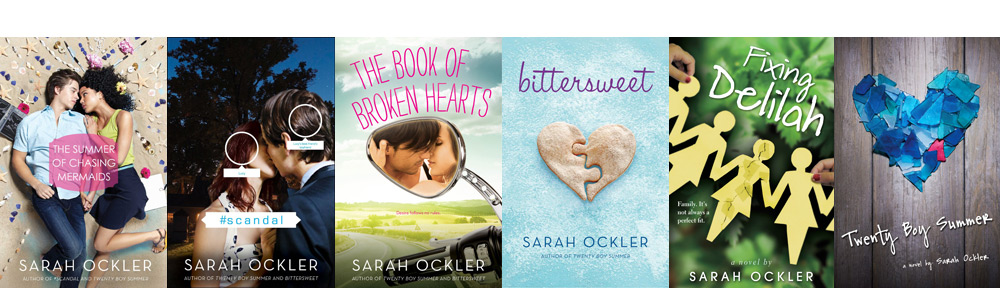
Now, if you’ve sold a multi-book contract — say, for your current book and then another to-be-determined book — you may have to work a little more closely within the publisher’s expectations. For example, I sold my first book, Twenty Boy Summer, in a two-book deal. When it came time to start working on the second book, I put together a proposal to share with my editor, and eventually we came to an agreement on what I’d write next — Fixing Delilah, which was another contemporary realistic romance. Since I’d accepted the two-book deal with Twenty Boy Summer as the first book, the assumption was that the second book would be written in a similar style. If I’d wanted to write an urban fantasy, that may or may not have worked.
However, once you’ve fulfilled your contract obligations, you’re free to write anything you’d like. Your publisher is free to pass on publishing it, and she may ask if you’d consider writing something like your last book, but that doesn’t mean you’re not allowed to write something new. That’s totally up to you, and if you’re interested in writing different genres or types of novels, you can discuss the best plan of action with your agent before you start the next new book (yet another reason to have an agent).
MYTH #16: Since witches are popular on the shelves and on TV right now, you should write a book about witches to increase your chances of getting an agent and a book deal.
For the record? I love witches, and I’ll never discourage an author from writing a book about them. But… only if you love witches too. Remember, traditional publication is a long process. From the time you accept a book deal, it may be two years before your book hits the shelves. So the books you’re seeing as trends on the store shelves today were actually written and sold two years ago. If you write a book about witches just to cash in on the trend, you’ll lose — witches will be replaced with a new trend two years from now. As a matter of fact, I just read a post from a YA agent stating that she won’t consider any witch stories now — that trend has passed.
However, like I said, if you love witches, you should totally write a witch book. There is always room for a well-written, passionately told story. But only if the author means it. No trend-chasing!
That’s it. Myths busted. Eyes glazed. Pajamas… worn. My work here is done.
I think I’ve covered just about every question and myth I’ve come across in my inbox of late. If I missed anything, or if there’s anything you’d like to know more about, or if you’d like to disagree or share your own experiences or otherwise add to the discussion, please leave your comments and questions below.
As always, happy reading and happy writing!





 Sarah Ockler